
About Latigo: the team on the ground in Latin America
We take sellers onto Mercado Libre and other Latin American marketplaces — remotely and turnkey. Below are the people who do it and the experience the company grew out of.
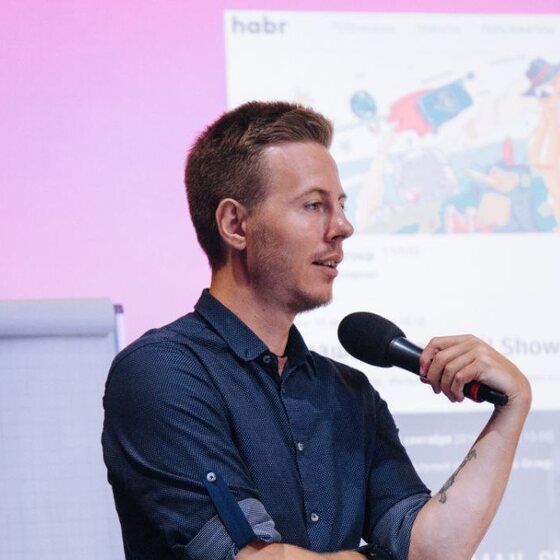
Alexey Slepenkov
Founder of Latigo
A serial entrepreneur with over 19 years of experience and businesses in four countries. A blogger with an audience of 120,000+, known for exposing scammers and for popularizing science and critical thinking.
I personally run the companies in Argentina, I hold Argentine citizenship and an active registered business. I sell on Mercado Libre myself — I know the platform from the inside. My name is the guarantee of honesty and transparency.
The team
A small team where everyone owns their own area. Your project is run by these people, not by an anonymous support desk.

Responsible for Latigo's marketing and for the Russian-speaking market. First conversations with sellers and the preparation of each product quote go through him.
Business development, internal processes, qualification of inbound enquiries, and the work of the team. He makes sure a seller's project does not get lost between countries and providers, and that every task has a deadline and an owner.
Responsible for inventory flow and running Mercado Libre in Brazil: stock levels and restocks, listings and prices on the platform, order and buyer handling. She makes sure the bestseller doesn't run out in the warehouse at peak demand and that slow-moving stock doesn't take up space.
My job is to make sure decisions get made on numbers, not on gut feel. I build the system that scans the Mercado Libre market every day and turns millions of scattered records into one clear answer: which niche to enter, at what price, and what happens if you wait a month. Separately, I work on what happens inside the seller dashboard — where views are lost, why a listing doesn't win, which processes can be taken off a person and handed to a machine.
Our experience
We aren't publishing Mercado Libre case studies yet — the company is young. What we do have are working businesses the team and its skills were assembled from.
Marketing agencies in Russia and Europe
The agency in Russia has been running since 2016; the international agency in Europe since 2022. That's why marketing, advertising, and influencer work sit inside the team rather than with a subcontractor.
Selling on marketplaces in three countries ourselves
We sell ourselves: listings, advertising, seller rating, and unit economics are daily practice, not theory from somebody else's course.
Car rental in Argentina
An operating business on the ground: a legal entity, local contractors, taxes, and customer service in Spanish.
Events and a business community in Argentina
Connections with local companies, venues, and entrepreneurs — the raw material for collaborations and offline brand promotion.
Why we can be trusted
Six things you can check before you pay us anything.
We sell on Mercado Libre ourselves
This isn't consulting assembled from somebody else's material: we run our own sales on the platform and know it from the inside — the fees, the tariffs, and how the platform behaves in a dispute.
Argentine and Brazilian citizenship
We aren't "partners on the ground," we're people with legal status in the country. That's what makes it possible to open companies, deal with customs, and sign documents, rather than forwarding them to a contractor.
Contract under international commercial law
The contract is signed with our company outside Russia and is governed by international commercial law. All settlements are in US dollars. Cross-border payments for goods, freight, and customs run through us. You do not open accounts abroad and do not deal with payment routing.
We work until there's a result
We take a share of sales, so our interest matches yours: until the goods sell, we don't earn either.
We return what wasn't spent
If you change your mind or something goes wrong, funds that haven't been spent are returned. That's written into the contract, not promised verbally.
We don't take on the impossible
If a task can't be solved, or can only be solved badly, we say so before the contract, not after the deposit. Turning a project down is cheaper for us than a damaged reputation.
Straight talk about risks
We're not going to write "there are no risks" — that's the first thing that puts a burned seller on guard. There are risks; here they are, and here's what we do about them.
The product doesn't sell
The most common and most real risk. It's mitigated by looking at the niche before importing and by our having the right to say "don't bring it in." We work for a share of sales, so we're motivated to sell your product: if it stalls, we work on price, the listing, and advertising, and after that we discuss a markdown or moving the remaining stock out.
A customs delay
Unlikely, but possible — above all if you chose informal "grey" freight. We work only with reliable importers and always recommend importing legally: that keeps the risk of delays to a minimum. If the cargo does get pulled for inspection, we handle the correspondence through the broker and show the costs as invoices, not as an "additional fee."
Exchange rate and inflation
We keep the accounting in US dollars; the exchange rate is fixed on the conversion date and stated in the report. Prices on the platform get reviewed more often than sellers are used to.
Complaints against a listing or the account
The platform can take a listing down over a brand complaint. That's why we recommend registering the trademark at the start rather than after the first wins — how it works.
Risks that don't exist here
The list is shorter than it looks. Some of the problems sellers are used to on their home marketplaces simply don't arise in this setup.
- The batch won't vanish because of a grey import schemeWe import legally, through a registered importer and a customs broker. Cargo being confiscated over the wrong import route is a grey-freight problem, not part of how we work.
- Fully declared customs clearance pays off even at small volumesUnlike the usual situation, where legal importing only makes sense from large batches upward, here duties and clearance are built into the unit economics from the first test shipment — and that shipment still turns a profit.
- The platform doesn't change terms retroactivelyMercado Libre announces fee changes in advance and publicly — as it did with Brazil moving to a variable fee in March 2026. We can't promise it will always be this way, but the platform doesn't practice unilateral changes that wipe out a seller's economics.
- Goods in the warehouse don't disappear for reasons you can't insure againstThe warehouse is far from any armed-conflict zone, the batch is insured for its full value, and check-in is documented with a photo report. Compensation is an insurance claim, not a correspondence thread with the platform.
Let's get acquainted
The first conversation commits you to nothing: we'll go through your situation and tell you whether it makes sense.